
Divya Drishti vs Artificial Intelligence: A Tech Perspective
Have you ever wondered if ancient wisdom can meet modern technology? In India's rich spiritual heritage, concepts like Divya Drishti and Akashic Records describe a way to see the past and understand universal patterns. Today, Artificial Intelligence, cloud storage, and predictive analytics provide tools that, in a sense, achieve similar goals: analysing data, predicting outcomes, and storing information. This article explores the fascinating parallels between ancient Indian insights and modern IT innovations.
1. Akashic Records = Cosmic Cloud Storage?
Ancient Idea:
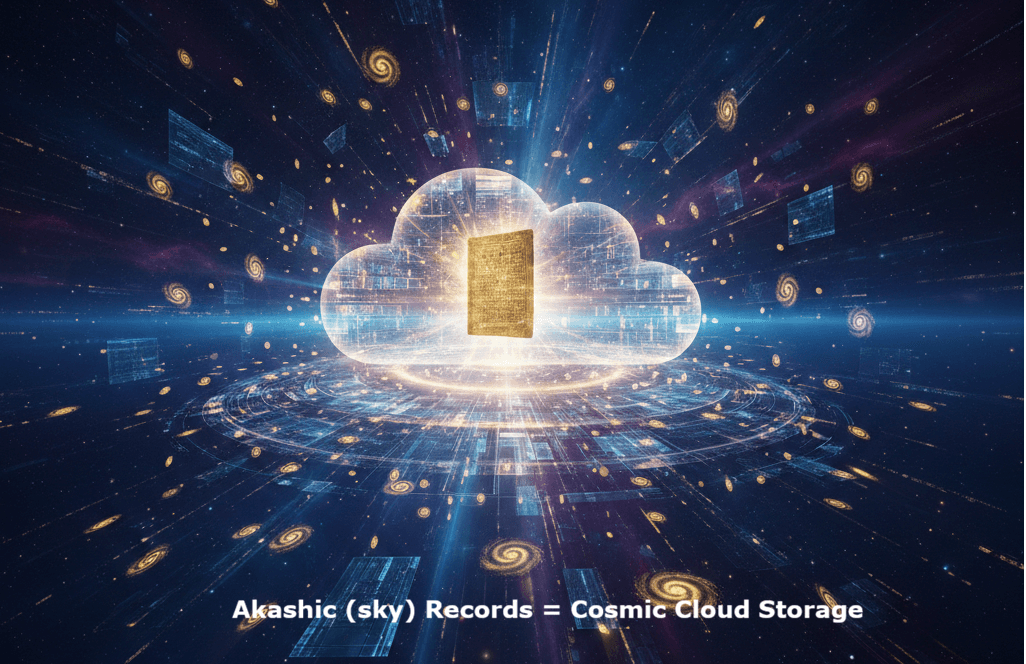
In ancient Indian texts, everything is recorded in Akash (the sky). This cosmic record stores all actions, thoughts, and events, creating a universal memory of everything that has ever happened. The concept highlights how sages imagined an all-encompassing system of data storage that preserves the past for insight and learning.
Modern Tech Comparison:
Today, we have cloud storage systems like AWS, Google Cloud, and Azure, along with distributed databases and immutable ledgers such as Blockchain. Just as these technologies log and preserve every digital activity, the Vedic concept of Akash “stores” all events in the universe. Think of it as an ancient vision of a cosmic database-a precursor to modern big data and information systems.
2. Divya Drishti = Advanced Real-Time Data Streaming?
Tech Comparison:
In today's technology-driven world, real-time data streaming has transformed how we monitor and respond to events. Tools like live CCTV feeds, remote sensing satellites, IoT devices, and real-time analytics dashboards provide instant insights, much like the ancient concept of Divya Drishti.
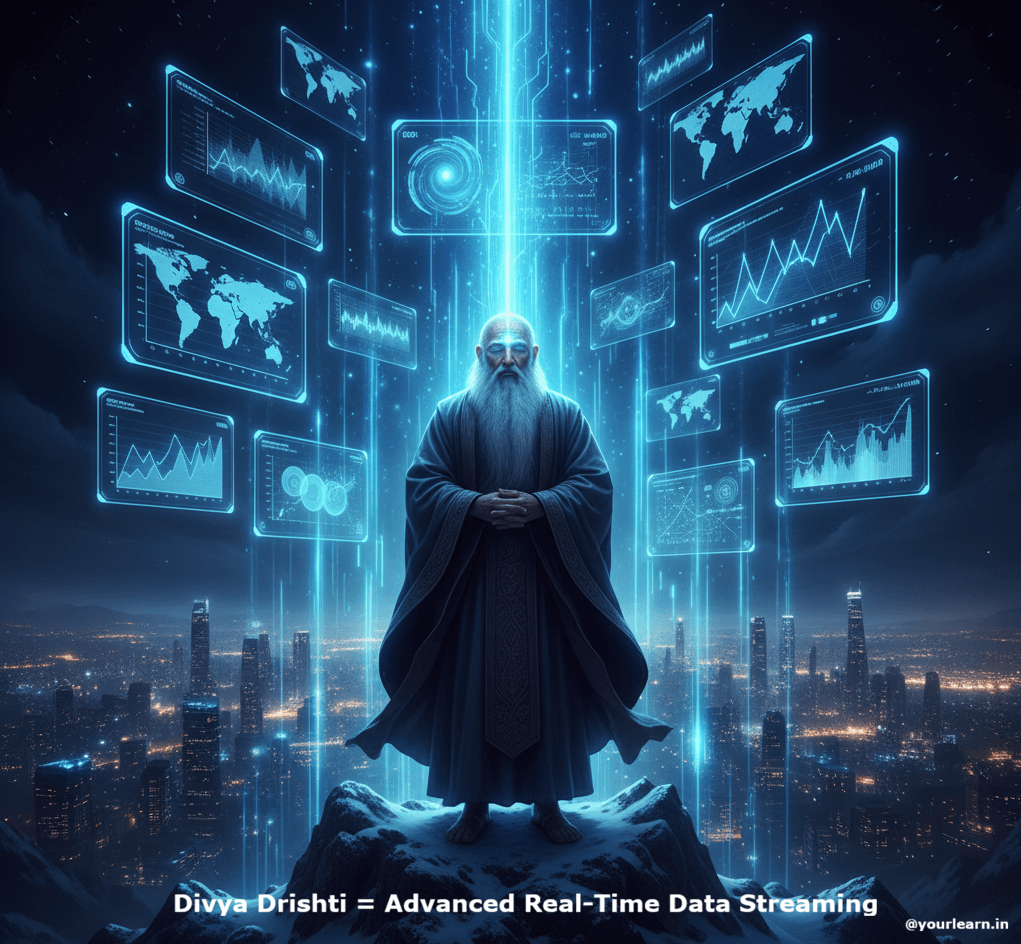
In the Mahabharata, Sanjaya was granted divine vision to narrate battlefield events live to King Dhritarashtra. In a sense, he became the first remote live broadcaster in mythology, demonstrating the timeless human desire to access distant information in real time.
3. Trikal Darshi = Predictive AI Models?
Ancient Concept:
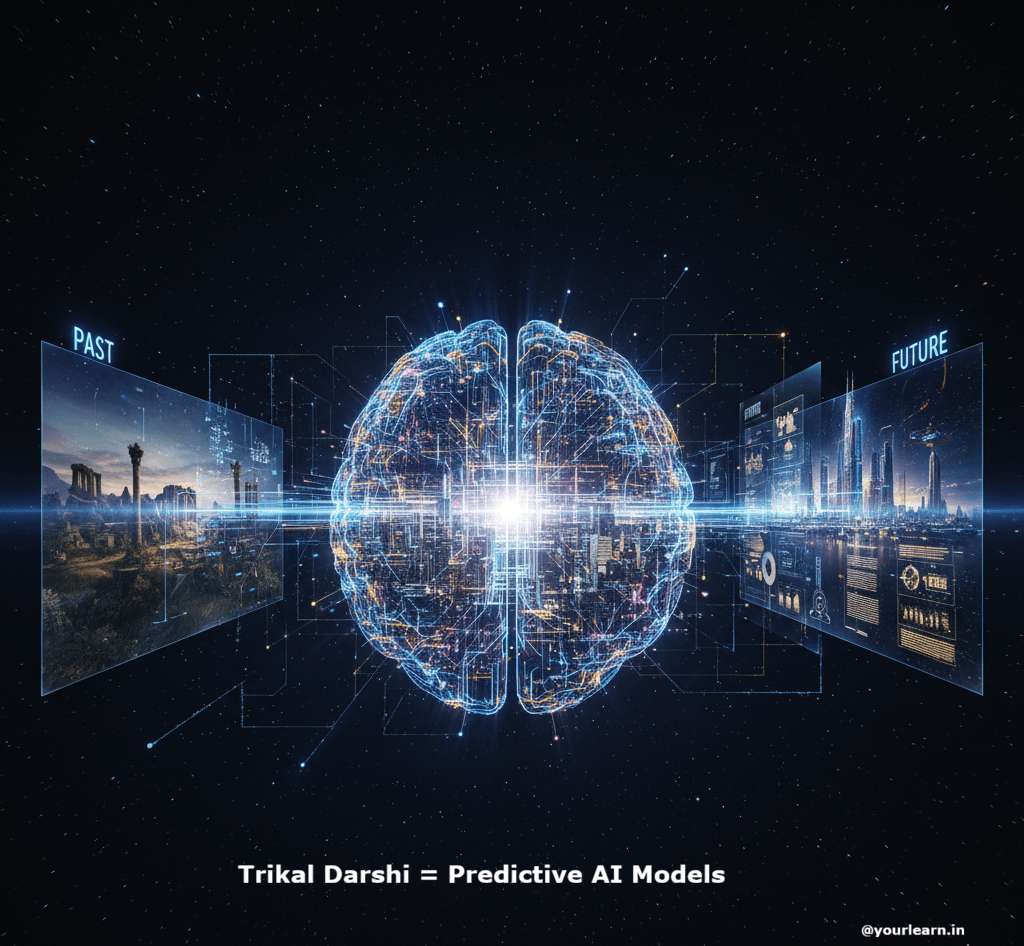
The Trikal Darshi were sages believed to perceive past, present, and future. While humans cannot literally see the future, they studied patterns of behaviour, events, and consequences. Similarly, AI does not predict outcomes magically; it analyses historical data to make informed predictions. This illustrates the timeless link between observation, pattern recognition, and foresight.
Modern Tech:
Today, predictive analytics, machine learning forecasting, and time-series modeling allow organisations to anticipate trends, behaviour, and events before they happen. These technologies transform raw data into actionable insights, much like the sages who interpreted patterns to understand the flow of time.
Examples of predictive AI applications include:
- Stock Market Prediction: Using historical trends to forecast financial outcomes
- Weather Forecasting: Predicting climate events using data models
- User Behaviour Analysis: Anticipating actions on platforms and e-commerce sites
4. Karma Theory = Data Feedback Loop?
Ancient Wisdom:
In ancient Indian philosophy, karma represents more than actions—it can be seen as a cosmic feedback algorithm. Every action generates a response, creating a natural cycle of cause and effect. This mirrors modern computational concepts like feedback loops and reinforcement learning.
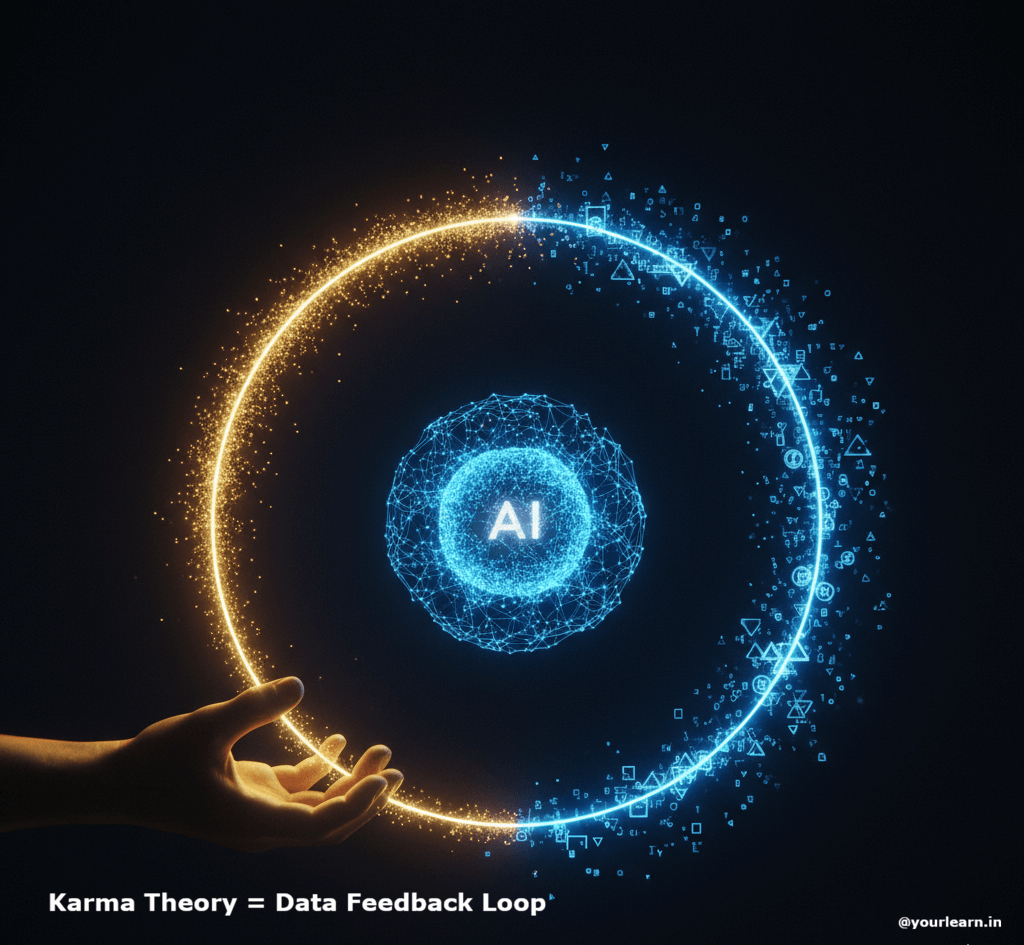
Tech Comparison:
Think of it like a digital system:
- Input → Process → Output: Every decision leads to measurable outcomes
- Feedback Loop: Systems learn from results to improve future responses
- Reinforcement Learning: Algorithms adjust strategies based on previous performance
Just as sages understood that every action has consequences, modern AI systems rely on iterative learning cycles to optimise performance over time.
Conclusion: Ancient Wisdom Meets Modern Technology
Throughout history, humans have sought ways to understand the past, present, and future. Ancient Indian concepts like Akashic Records, Divya Drishti, Trikal Darshi, and Karma offered profound insights into the patterns of life, consciousness, and universal order. While these ideas were spiritual and philosophical, they mirror many principles we use in today’s technology: big data analysis, cloud storage, real-time streaming, predictive AI models, and feedback loops.
The truth is that there is no shortcut to “seeing the past” or predicting the future with absolute certainty. Ancient sages achieved their insights through deep meditation, observation, and pattern recognition. Modern AI achieves something similar through careful data collection, analysis, and algorithmic learning. Both require patience, discipline, and a systematic approach.
By studying these ancient teachings alongside modern technology, we can gain a richer understanding of how knowledge, observation, and data intersect. The real way to “see the past and prepare for the future” is through consistent learning, analysis of patterns, and applying wisdom—whether from spiritual traditions or artificial intelligence.
Final Thought: Ancient wisdom and modern AI are not opposing forces—they complement each other. By connecting the insights of the past with the tools of today, we can unlock deeper understanding and make smarter, informed decisions in both life and technology.